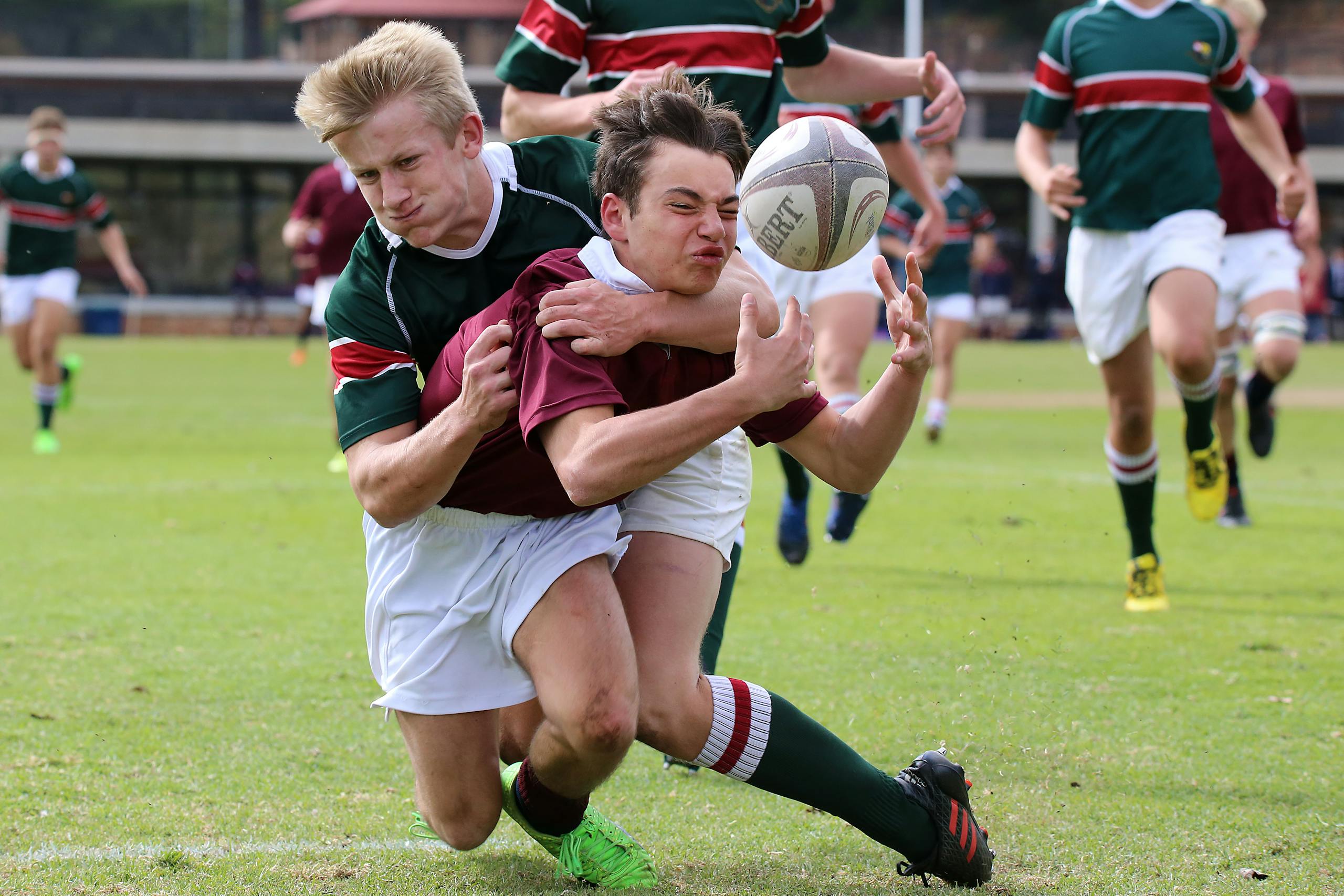
Rugby Head Injury Statistics, Level by Level
First published August 12th 2025. Updated November 13th 2026.
How common is concussion in rugby? It depends on the level you play. In professional rugby, a team can expect a diagnosed concussion every few matches. In elite women’s rugby in England, concussion is now the most commonly reported match injury. In community and youth rugby the recorded rates vary more, partly because injuries are recorded in different ways.
Below are the rugby head injury statistics that matter, level by level, each with its source and the seasons it covers. Where the data are thin, we say so.
How Rugby Measures Head Injuries
Studies count concussions per 1,000 player match hours. One team of 15 players in an 80-minute match adds up to 20 player hours. So a rate of 10 per 1,000 hours works out at roughly one concussion every five matches for a team. That conversion is our own arithmetic, to make the numbers easier to picture.
Most of the best data come from elite rugby, where doctors are at every match and every injury is logged. Community rugby relies on clubs, physios and volunteers to report injuries, so comparing the two needs care.
Professional Men’s Rugby
The longest record comes from English professional rugby. A 16-season study of 3,006 Premiership players found:
- 2002/03 to 2009/10: the match concussion rate was stable at 4.3 per 1,000 player match hours.
- The peak: it then rose to 20.9 per 1,000 in 2016/17, close to one diagnosed concussion every two to three matches per team.
- More players affected: the share of players concussed each season rose too. The authors read this as more players being concussed, not the same players again and again.
The study reports the rise; it does not settle the cause. Over the same years, the way elite rugby looks for concussion changed a great deal, including the introduction of the Head Injury Assessment.
A wider view comes from a meta-analysis of 37 studies. It put match concussion in men’s rugby union at 4.73 per 1,000 player match hours, against 0.07 per 1,000 hours in training. Matches, not training, carry almost all of the risk.
Elite Women’s Rugby
The Women’s Rugby Injury Surveillance Project report for 2024-25, run by the RFU and the University of Bath, covers the Premiership Women’s Rugby league:
- Number: 40 match concussions in the season.
- Rate: 13.4 per 1,000 match hours, within the expected range of the previous three seasons.
- Share: concussion made up 25% of all match injuries, the most of any injury.
2024-25 was also the first season with instrumented mouthguards across the whole league. They measure head accelerations and help doctors identify possible concussions.
Community Rugby
Community data are thinner, but two recent studies help.
In Ireland, a six-season study of adult community players recorded 456 concussions across 5,740 player-seasons from 2017/18 to 2023/24:
- Match days: 93.9% happened on match days.
- Timing: they were more likely in the second half (63.5% for men, 72.1% for women).
- The tackle: for men, 55.9% of match-day concussions happened while tackling.
- Players affected: each season, between 4.0% and 9.7% of male players and between 3.1% and 7.0% of female players had a concussion.
- Time out: women were more likely than men to be out for more than 28 days (46% against 30%).
In New Zealand, a study of 5,879 community players from 2020 to 2022 logged 16.6 suspected concussions per 1,000 match hours. About half of those cases (49.9%) followed the full management pathway, from logging the injury to medical clearance.
Youth Rugby
The evidence for children and teenagers is patchy. A systematic review of 25 studies found youth rugby union match concussion rates from 0.2 to 6.9 per 1,000 player hours. The authors noted that studies defined concussion in very different ways, and called for routine monitoring in schools and clubs.
Newer studies add detail. In a two-season Canadian high school study, the match concussion rate for girls was 70% higher than for boys. In English schoolboy rugby, a study of under-15 and under-18 teams compared three seasons before and one season after the legal tackle height was lowered to the armpit. Tackle technique changed, with fewer shoulder-height tackles, and injury and concussion rates were not significantly different.
World Rugby recommends a more conservative return to play for children and adolescents.
What the Numbers Tell Us
- The tackle is the key moment: in the Irish community data, most men’s concussions happened while tackling.
- Matches carry the risk: both the meta-analysis and the Irish study put almost all concussions in matches.
- Recording shapes the numbers: elite rugby has doctors, video review and now instrumented mouthguards. Community figures depend on what clubs report, so levels are hard to compare directly.
- The game has responded: in the 16-season study, 27% of professional players returned in under six days before graduated return-to-play guidelines arrived in 2011. Afterwards that fell to 7%, and from 2014/15 no player returned in under six days.
Rugby is thriving, and the people who run it are taking concussion seriously. These rugby head injury statistics show why that work matters at every level.
What This Means on Matchday
None of this replaces medical advice. World Rugby’s message for every level of the game is Recognise and Remove: anyone with a suspected concussion comes off, does not return that day, and is referred to a qualified healthcare professional. In England, the RFU’s HEADCASE programme sets a minimum of 21 days before any community player returns.
If you or a teammate has just taken a head knock, our step-by-step guide covers the first hours and days: What To Do In a Concussion
Conclusion
So, how common are concussions in rugby?
It depends on the level, and on how carefully injuries are recorded. The English Premiership peaked at 20.9 per 1,000 player match hours, and the women’s Premiership recorded 13.4 per 1,000 in 2024-25. Community figures vary widely, from a New Zealand study that logged 16.6 suspected concussions per 1,000 match hours to youth rates of 0.2 to 6.9 per 1,000 in older studies.
Current scrum caps have not been shown to reduce concussion risk, so for now the answers are recognition, removal and recovery. For the evidence on headgear, see Do Rugby Scrum Caps Prevent Concussions?
FAQ: Rugby Head Injury Statistics
How common are concussions in rugby?
It depends on the level. English Premiership men’s rugby peaked at 20.9 per 1,000 player match hours in 2016/17, and the women’s Premiership recorded 13.4 per 1,000 match hours in 2024-25. Community and youth figures vary widely, from 0.2 to 6.9 per 1,000 player hours in youth studies to 16.6 suspected concussions per 1,000 match hours in a New Zealand community study.
References
- West, S.W., Cross, M., Trewartha, G., Taylor, A., Brooks, J., Kemp, S., Locke, D., Ahmed, O., & Stokes, K. (2021). Trends in match concussion incidence and return-to-play time in male professional Rugby Union: a 16-season prospective cohort study. Brain Injury, 35(10), 1235–1244.
- Gardner, A.J., Iverson, G.L., Williams, W.H., Baker, S., & Stanwell, P. (2014). A systematic review and meta-analysis of concussion in rugby union. Sports Medicine, 44(12), 1717–1731.
- RFU and University of Bath. (n.d.). Women’s Rugby Injury Surveillance Project: 2024-25 season report.
- Power, L.C., et al. (2026). Sport-related concussion characteristics and time-loss among male and female community rugby union players across 6 seasons. Sports Health. Advance online publication.
- Salmon, D., et al. (2026). Predictors of concussion management pathway adherence in New Zealand community rugby: a prospective cohort study. JSAMS Plus, 8, 100161.
- Kirkwood, G., Parekh, N., Ofori-Asenso, R., & Pollock, A.M. (2015). Concussion in youth rugby union and rugby league: a systematic review. British Journal of Sports Medicine, 49(8), 506–510.
- Shill, I.J., et al. (2023). Differences in injury and concussion rates in a cohort of Canadian female and male youth Rugby Union. British Journal of Sports Medicine. Advance online publication.
- Roberts, S.P., et al. (2026). The effect of lowering the maximum tackle height in English Schoolboy rugby union on tackle characteristics and all-injury and concussion rates. Journal of Science and Medicine in Sport, 29(3), 238–248.
- World Rugby. (n.d.). Recognise and Remove.
- Rugby Football Union. (n.d.). HEADCASE: Concussion Guidance.
Let’s Tackle Rugby Concussions Together
At Pro’Tech Rugby, we’re committed to genuinely building a safer future for the game we love. Our research and innovation are guided by trusted science and real-world rugby experience.
– The Pro’Tech Rugby Team
Explore more at ProTechRugby