HIA in Rugby: What Happens When a Player Goes Off for a Head Injury Assessment
November 13th 2026
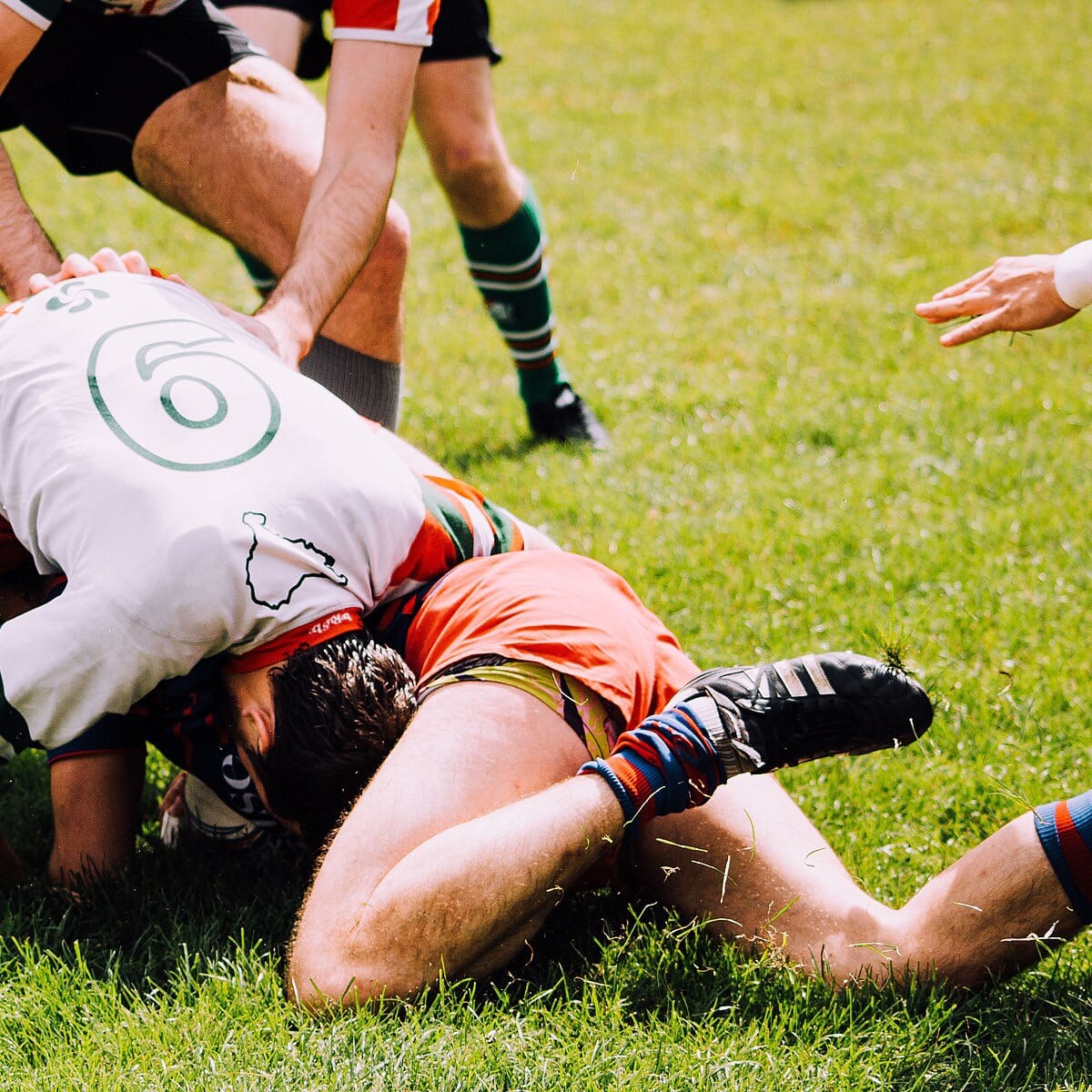
You have seen it a hundred times. A big collision, a player slow to get up, the physio jogging on, and then the commentator says it: “they’ve gone off for an HIA”. A replacement runs on, play carries on, and twelve minutes later the player either jogs back on to applause or spends the rest of the afternoon in a tracksuit.
So what actually happens in that time? HIA stands for Head Injury Assessment, and it is the rugby concussion protocol World Rugby uses in elite matches. The check you see during the game is only the first of four stages. The full process runs for days after the final whistle, and it ends only when a doctor clears the player to play again.
Concussion is hard to spot in the moment. A player can look fine and not be, and plenty of them will tell you they are fine either way. The HIA in rugby is there to take that call out of their hands.
What HIA Means in Rugby
The HIA is set out in World Rugby’s HIA Protocol, a document written for match-day doctors. It works hand in hand with the law that lets a team bring on a temporary replacement while a player is assessed, so the team is not left a player down while the doctors take their time. That law became permanent in elite adult rugby in April 2015.
It is also more than a test on the sideline. The doctors put together what they saw on the pitch, the video replays, alerts from smart mouthguards and their own clinical judgement. And it is not for everyone: only competitions approved by World Rugby can use it.
How the HIA Works: The Four Stages
HIA1: The Off-Field Check
A player can be flagged by the match officials, either team’s doctor or the independent match-day doctor, from what they see live, from a replay or from a mouthguard alert. What happens next depends on how clear-cut it is.
If there are obvious signs of concussion, there is no test and no debate. World Rugby lists 11 of these, including a confirmed or suspected loss of consciousness and a player who is clearly dazed. That player is treated as concussed and their match is over.
If it is less clear, the player goes off for an off-field assessment. The doctors run through a version of the Sport Concussion Assessment Tool (SCAT), which checks symptoms, memory and balance, and they look at the video of the incident again.
That check takes a fixed 12 minutes, and World Rugby is strict about it: “absolute time not playing time”, counted from the moment the player crosses the touchline. If there is also a cut that needs stitching, the doctors get 17 minutes for both.
Passing does not mean an automatic return, either. If the doctor still has concerns, that judgement beats a clean test result, and the player stays off.
HIA2: The Post-Match Check
Every player who went into the HIA process is seen again after the game, within three hours of the final whistle and before they leave the ground. That includes the ones taken off for obvious signs. The point is to catch a concussion early, while it is still fresh.
HIA3: The Follow-Up Two Nights Later
Some concussions only show themselves a day or two later, which is why the third check happens after two nights’ sleep, 36 to 48 hours after the knock. It sometimes includes a computerised thinking test. Only when HIA2 and HIA3 both come back normal, and the doctor has no other worries, is a concussion ruled out.
A player who starts feeling symptoms after the game, without anything being flagged on the day, can join the process at either of these two stages.
HIA4: Return to Play After Concussion
The last stage is about recovery. The player works through an individual rehab programme, and this stage records the point at which they are cleared for full rugby again.
How long that takes depends on the player. Under World Rugby’s elite return-to-play rules, anyone with a history of concussion, or anyone taken off with obvious signs, is out of competitive rugby for at least 12 days. A player with no concussion history and a normal HIA3 can be eligible to come back on the seventh day. Either way, an independent concussion consultant has to sign off the return.
Smart Mouthguards and the HIA
These are the mouthguards with sensors in them (World Rugby calls them instrumented mouthguards, or iMG). They measure how fast the head is accelerating during contact. In 2024, World Rugby agreed to its concussion working group’s recommendation to make them part of the HIA Protocol, and a big enough reading can now trigger an off-field check on its own.
They also decide who gets the 12-minute check in the first place. Only players who stick to World Rugby’s mouthguard rules (wearing one in training, at kick-off and for at least half of their match time before the incident) can go through HIA1. Anyone else is dealt with under Recognise and Remove: if a concussion is suspected, they come off and stay off.
HIA vs Recognise and Remove: How Community Rugby Is Different
On a Saturday at your local club there is usually no match-day doctor, no replay screen and no approved system, so the HIA is not used in community or age-grade rugby. The rule there is simpler: Recognise and Remove. If anyone suspects a concussion, the player comes off and does not go back on that day. There is no 12-minute check and no second chance.
World Rugby’s guidance for the general public says every suspected concussion should be seen by a medical or approved healthcare professional, even if the symptoms clear up. In the community game the minimum stand-down is 21 days, counting the day of the injury as day 0.
In England, the RFU’s HEADCASE programme sets the same 21-day minimum for every community player, with a gradual return over six stages. Other unions have their own rules, so it is worth checking yours.
If you or a teammate has just taken a knock to the head, our step-by-step guide walks you through the first hours and days: What To Do In a Concussion
Conclusion
So, what is an HIA in rugby?
It is how the elite game deals with a possible concussion: a 12-minute check during the match, another within three hours of the final whistle, a third two nights later, and a doctor’s sign-off before the player plays again. Most community rugby has neither the doctors nor the cameras for that, so it keeps things simple with Recognise and Remove.
The whole process exists because concussion is one of the most common injuries in rugby. For the numbers at every level of the game, with sources, see Concussion in Rugby: Head Injury Statistics and What They Mean
FAQ: HIA in Rugby
What does a failed HIA mean in rugby?
It means the off-field check found a result worse than the player’s baseline, or the doctor suspects a concussion. The player takes no further part in the match and continues through the later stages of the protocol.
Is the HIA used in community rugby?
No. The HIA needs resources most community matches do not have: a doctor at pitchside, video review of the incident and instrumented mouthguard alerts. World Rugby says it is only to be used in HIA-approved competitions. Community and age-grade rugby use Recognise and Remove instead: a player with a suspected concussion is removed and does not return to play or train that day.
Sources:
World Rugby Passport: HIA Protocol https://passport.world.rugby/player-welfare-medical/concussion-management-for-match-day-medical-staff-using-the-hia-protocol/hia-protocol/
World Rugby: Graduated Return to Play Protocols https://www.world.rugby/news/726163/new-world-rugby-graduated-return-to-play-protocols-set-gold-standard
World Rugby: Recognise and Remove https://www.world.rugby/the-game/player-welfare/medical/concussion/recognise-and-remove
World Rugby Passport: Concussion Management for the General Public https://passport.world.rugby/player-welfare-medical/concussion-management-for-the-general-public/summary-principles/
RFU HEADCASE: Concussion Guidance https://www.englandrugby.com/run/player-welfare/headcase
Let’s Tackle Rugby Concussions Together
At Pro’Tech Rugby, we’re committed to genuinely building a safer future for the game we love. Our research and innovation are guided by trusted science and real-world rugby experience.
– The Pro’Tech Rugby Team
Explore more at ProTechRugby